
Harish joined the Business Development team at Integrum ESG after having previously overseen BD for the investment network Venture Giants, and also worked within the Customer Experience Program Team at Amazon. He has a BSc in Philosophy, Logic and Scientific Method from the London School of Economics and Political Science.
AI data centres need electricity, and the companies that supply it have had a strong earnings season. Bloom Energy's quarterly revenue more than doubled, Schneider Electric reported a record quarter and Siemens Energy says its gas turbines are booked out until 2028.
Much of that power comes from natural gas, which means the AI power trade carries fossil fuel and carbon exposure that grows with demand.
This article uses Integrum ESG's revenue and emissions data to look at where that exposure sits at Siemens Energy, Bloom Energy and Schneider Electric, and what it means for the investors who hold them.
Revenue exposure and emissions figures are the latest each company has reported, taken from Integrum ESG company data and checked against company disclosures.
Short on time? See how the AI power trade shows up in your portfolio's exclusions and emissions.
Siemens Energy earned 30.7% of its revenue in the year to September 2025 from equipment and services for fossil fuel power generation, a share covered by some fossil fuel exclusion policies and not others.
Bloom Energy's Scope 1 and 2 emissions rose 9.7% to 2.95 million tonnes in 2025, almost 24 times Schneider Electric's, because it counts the emissions of every fuel cell it operates as its own. Bloom itself warns that carbon pricing could erode the savings its natural gas-fuelled systems offer customers.
Schneider Electric's emissions from its own operations fell 13.6% in 2025, but its value chain emissions rose 8.9% to 60.6 million tonnes. Its footprint shrank on a Scope 1 and 2 basis and grew once Scope 3 is included.
Capital spending by five of the largest technology companies exceeded $400 billion in 2025 and is set to rise a further 75% this year, according to the International Energy Agency (IEA). Electricity demand from data centres rose 17% in 2025, and the IEA expects it to double by 2030.
Power is now one of the main constraints on that build-out. The IEA points to slow grid connections and tight supply chains for gas turbines and transformers, and says many developers in the United States are turning to on-site gas-fired power to get projects running.
Siemens Energy, Bloom Energy and Schneider Electric meet that demand at three different points between the power source and the server. Siemens Energy builds the gas turbines and grid equipment that generate and carry electricity, Bloom generates it on site with fuel cells and Schneider distributes and manages it inside the data centre.
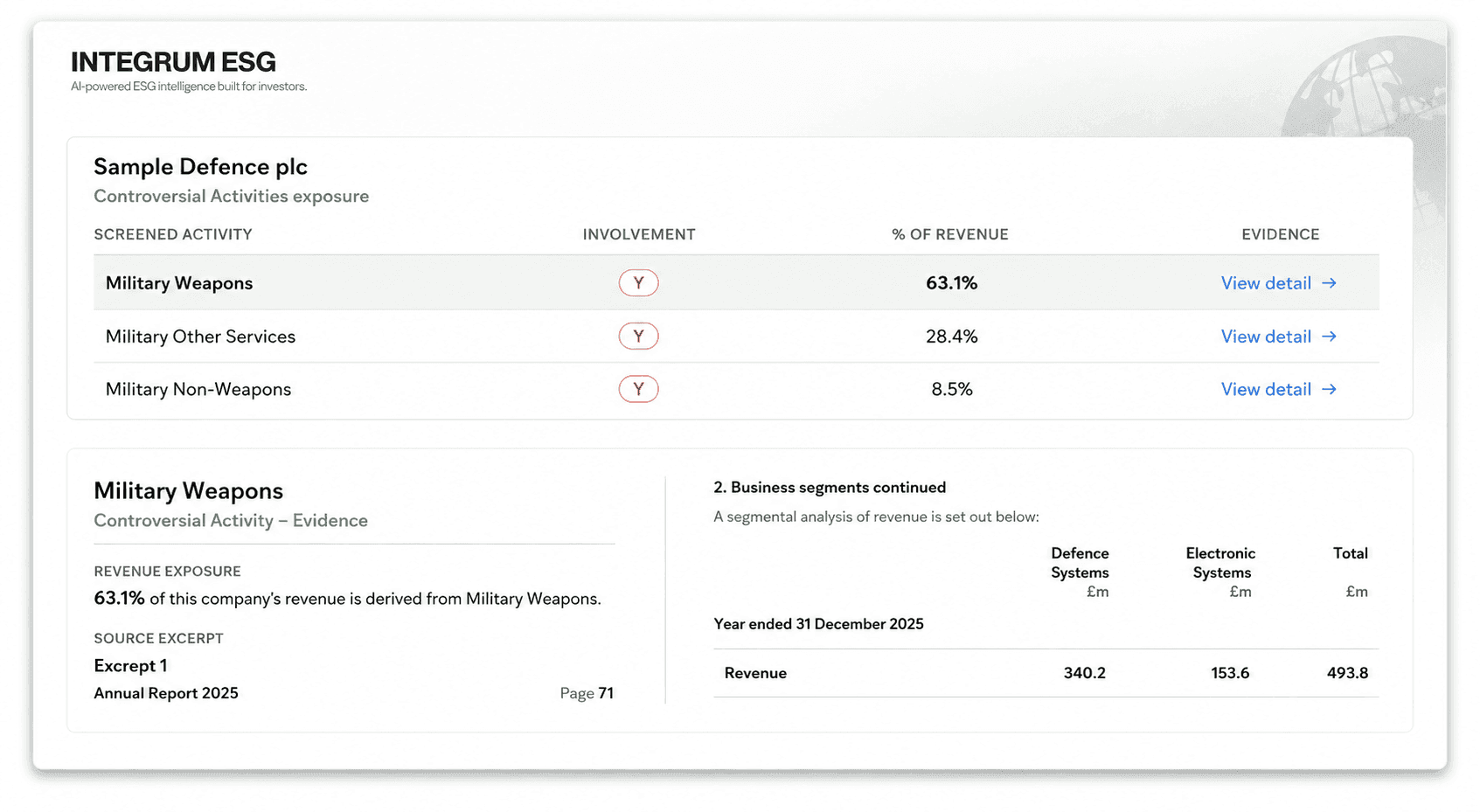
The revenue figures come from Integrum ESG's Controversial Activities data, which measures how much of a company's revenue comes from activities such as fossil fuel power generation. The emissions figures come from its company emissions data across Scope 1, 2 and 3.
Scope 1: direct emissions from sources a company owns or controls, such as its plants, its vehicles and, in Bloom's case, the fuel cells it operates.
Scope 2: emissions from the electricity, heat and steam a company buys. Figures in this article are market-based.
Scope 3: all other emissions in its value chain, from the goods it buys to the use of the products it sells.
| Company | Where the exposure sits | Key figure | Why it matters |
|---|---|---|---|
| Siemens Energy | Revenue | 30.7% of revenue from fossil fuel power generation | Falls under some fossil fuel exclusion policies and not others |
| Bloom Energy | Own operations | 2.95mn tonnes of Scope 1 and 2 emissions, up 9.7% | Adds heavily to Scope 1 and 2 footprints and carries carbon pricing risk |
| Schneider Electric | Value chain | 60.6mn tonnes of Scope 3 emissions, up 8.9% | Footprint shrinks on Scope 1 and 2 and grows with Scope 3 |
Source: Integrum ESG company data, latest reported year.
Generation equipment
Siemens Energy makes gas turbines, grid equipment and, through Siemens Gamesa, wind turbines. In June it raised its forecast for the global gas turbine market to 110 to 120 GW a year, called data centres an "important contributor" to demand and said it was booked out until 2028, according to S&P Global.
Integrum ESG's Controversial Activities data attributes 30.7% of Siemens Energy's revenue in the year to September 2025 to fossil fuel power generation: 20.3% from services and 10.4% from equipment. Services make up the larger share because a turbine is typically serviced for decades after it is installed. The gas turbine orders that data centres are helping to drive will add to both, first as equipment revenue when the turbines are delivered and then as service revenue for years afterwards.
The same business drives its emissions. Siemens Energy's own operations produced 194,460 tonnes of CO2e in its 2025 financial year. The products it sold that year, such as gas turbines, transformers and compressors, are expected to emit about 1.39 billion tonnes over their lifetimes, according to its Annual Report 2025, an estimate that assumes no unabated fossil fuels are burned after 2050.
Siemens Energy neither extracts fossil fuels nor generates power from them, so exclusion policies written around those activities do not cover it. Its 30.7% falls under policies that also cover equipment and services for fossil fuel power generation, which Integrum ESG tracks as separate activities.
For the activities investors screen most often, and how revenue exposure to each is measured, see our breakdown of controversial activities.
On-site power
Bloom Energy's solid oxide fuel cells generate electricity on site from natural gas, biogas or hydrogen, and data centre operators looking for reliable power have become major customers. The company reported third-quarter revenue of $1.24 billion, up 138.1% on a year earlier, and raised its full-year guidance to $4.4 to 4.6 billion, its third increase this year.
Bloom keeps exclusive operational control of all its fuel cell installations in operation, so their emissions count as its own Scope 1, according to its 2025 Impact Report. Its Scope 1 and 2 emissions rose 9.7% to 2.95 million tonnes in 2025, and each new system adds to that figure while it runs on natural gas.
Bloom estimates its fuel cells emitted 25% less than the US grid electricity they displaced. Even so, its Scope 1 and 2 emissions are almost 24 times Schneider Electric's, though Schneider is many times its size. In a portfolio carbon footprint measured on Scope 1 and 2, a holding in Bloom can therefore weigh far more than its position size suggests.
Carbon policy could also affect demand for its systems. Bloom says its projects may become subject to carbon pricing, and its climate risk disclosure warns:
"The introduction of meaningful carbon pricing may erode savings that drive customer value from our natural gas-fueled energy servers."
Bloom Energy, 2025 Impact Report
Power distribution
Schneider Electric supplies the power distribution, energy management and cooling systems inside data centres. It reported record third-quarter revenue of €11.5 billion, organic growth of 17% and triple-digit growth in data centre orders.
Its own emissions are falling. Scope 1 and 2 emissions fell 13.6% to 124,158 tonnes of CO2e in 2025, mostly because its Scope 2 emissions fell by 36%. Renewables now make up 63% of its energy use.
Its value chain is moving the other way. Scope 3 emissions rose 8.9% to 60.6 million tonnes, nearly 500 times those of its own operations. On a Scope 1 and 2 basis, Schneider's footprint shrank in 2025. Funds reporting principal adverse impacts under SFDR include Scope 3, and on that basis it grew.
AI's demand for power and the exposure that comes with it are rising together. The IEA expects data centres' electricity use to double by 2030, Siemens Energy's turbine orders will feed its fossil fuel revenue for years and each new Bloom system adds to its emissions while it runs on natural gas.
What that means for a portfolio depends on the company. For Siemens Energy it comes down to policy wording: its 30.7% falls outside exclusions aimed at fossil fuel producers and inside those that cover power generation equipment and services. Bloom's exposure adds heavily to Scope 1 and 2 emissions and leaves it exposed to carbon pricing, which it says could erode the savings that drive demand for its systems. Schneider's shows up mainly in Scope 3, which funds reporting under SFDR include.
For investors holding these companies, directly or through funds, that makes company-level revenue and emissions data as relevant as the earnings figures. Integrum ESG's Company Intelligence and Controversial Activities data show where a company earns its revenue and where its emissions sit, with coverage of 6mn+ ISINs across companies and funds.
Speak to an expert about the exposure behind the AI power stocks you hold.


Browse frequently asked questions about the platform.
Can’t find the answer you’re looking for? Please get in touch with our team.